Note: this covers developing law as of 2026. The state-by-state picture changes as new bills pass, so treat the specifics as a snapshot and the strategy as the durable part.
The biggest regulatory shift for adult platforms in the US arrived in 2025, when the Supreme Court settled a long-running question about whether states can require age verification to access adult content. The answer reshapes the landscape OnlyFans creators operate in, so here is what happened and what it actually means for you.
What did the Supreme Court decide?
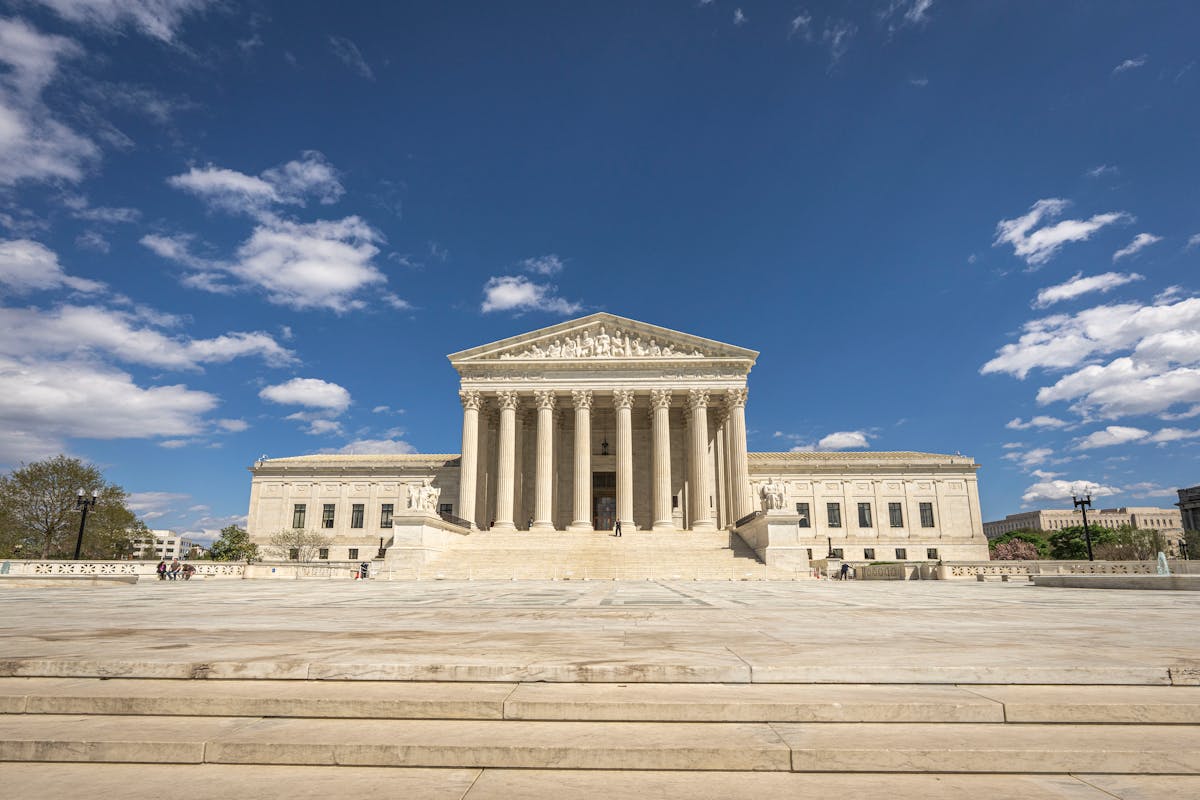
On June 27, 2025, the Court decided Free Speech Coalition v. Paxton, upholding a Texas law that requires commercial sites where more than a third of the content is sexual material harmful to minors to verify that users are 18 or older. In a 6 to 3 ruling, the majority, in an opinion by Justice Thomas, applied an intermediate level of First Amendment scrutiny and found the law a permissible way to keep minors from explicit content, treating its effect on adults as incidental. The three dissenting justices argued the law should have faced the stricter standard. The decision signaled that similar age-verification laws are on solid constitutional footing.
The state patchwork
The ruling did more than settle Texas. At the time of the decision, more than twenty states had already passed similar requirements, and the green light from the Court makes more likely. Active examples include Texas, Louisiana, Utah, Virginia, and Mississippi, among others. Accepted methods generally include government ID or commercially reasonable checks using transactional data. Notably, some large adult sites have chosen to block entire states rather than implement verification, which reshapes where traffic flows.
What about 2257 and creator obligations?
Separate from age-verification laws, US producers of adult content have long been subject to federal 2257 record-keeping rules, which require documentation that every performer is 18 or older. OnlyFans handles most of this through its own verification system, but US creators should be aware the obligation exists and understand their individual position. Again, this is general information, not legal advice.
What it means for OnlyFans creators
As in Europe, the heavy lifting sits with the platform:
- Platform-level verification. OnlyFans is responsible for meeting these requirements, so you are not checking subscriber IDs yourself.
- Some traffic effects. In states with active laws, a share of would-be subscribers drop off at verification, and geoblocking certain states has become a more common creator practice.
- A reason to diversify. With the legal trend pointing toward more verification, not less, spreading your audience across states, regions, and platforms is the smart hedge.
The measured take: these laws exist to keep minors away from adult content, and the industry is better off being seen to take that seriously. The trade-off is real friction for adult subscribers, but a compliant platform is a more stable foundation than one fighting for its legality. Building your page as a real business, with diversified traffic, is what makes regulatory shifts manageable rather than threatening.
The bottom line
The Supreme Court upheld state age-verification laws for adult sites in 2025, and similar laws are now active across many US states. OnlyFans handles verification at the platform level, so for creators the practical impact is traffic friction in some states and a clear case for diversifying. Stay aware of the laws where your audience lives, keep good records, and lean on professionals for anything legal.